Understanding Guided Respiration Mindfulness Therapy
Guided Respiration Mindfulness Therapy (GRMT) is a clinically oriented, experiential approach to breathwork developed specifically for mental health practice by psychotherapist Lloyd Lalande, PhD. It synthesises three core components—regulated breathing, somatically focused mindfulness, and relaxation—within a structured therapeutic process. Rather than treating breathwork simply as a technique for relaxation or symptom management, GRMT guides respiration in a way that allows deeper contact with challenging inner experience while providing support to remain present in a non-defensive way, and integrating those experiences into a wholistic sense of wellbeing.
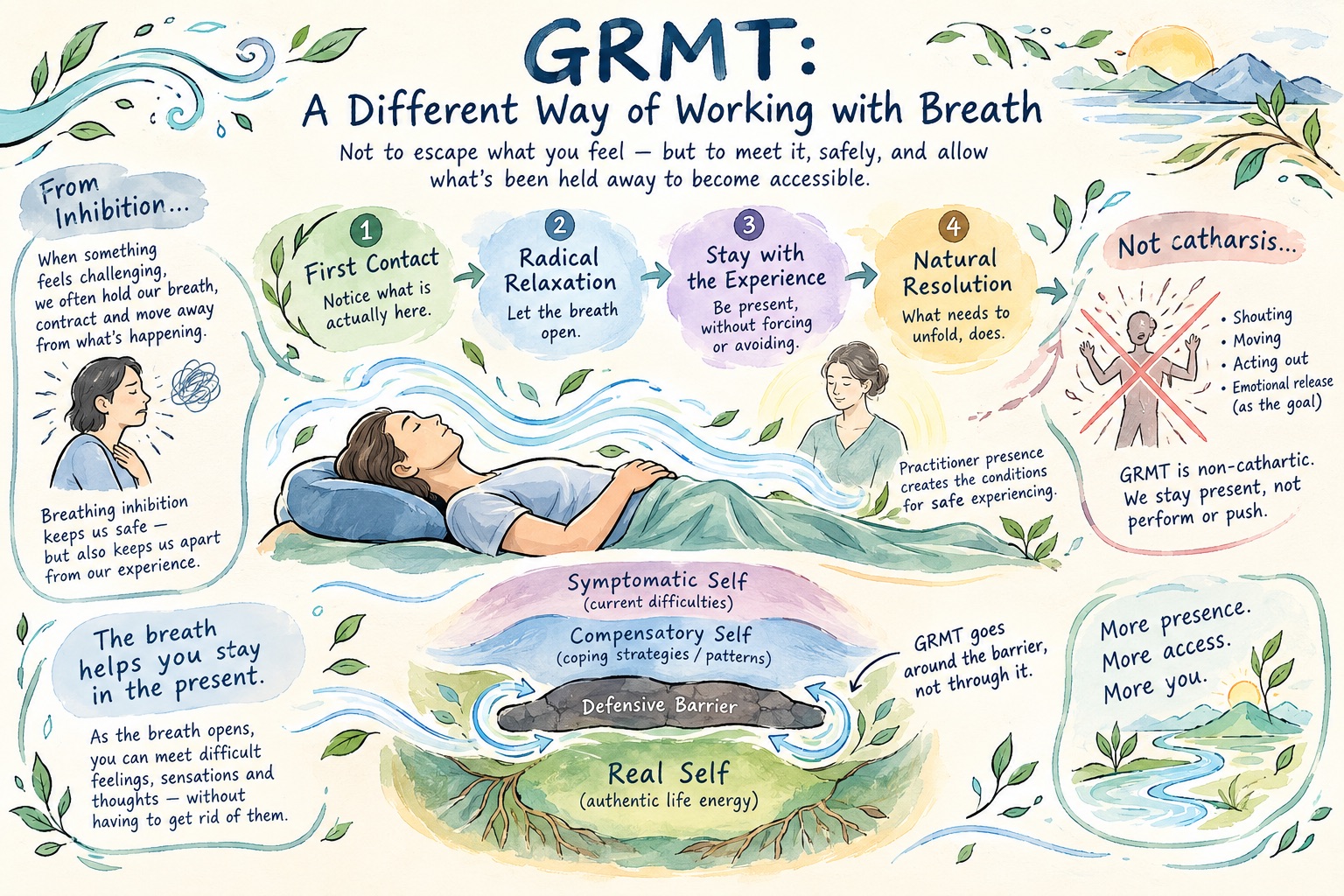
GRMT represents an evolution of earlier forms of therapeutic and experiential breathwork. While breathwork has been used for many decades in personal development and psychotherapy, its wider integration into clinical mental health practice has been limited by considerable variation in methods, training, and professional standards, as well as a relatively small research base. GRMT was developed in response to these limitations, with a manualised treatment protocol, a defined practitioner training process, and an emphasis on clinical safety, practitioner competence, and empirical evaluation.
The distinctive focus of GRMT is on what happens when breathing is inhibited or altered in response to difficult experience. Most people are unaware of the extent to which their breathing has become habitually restricted, or how they automatically change their breathing when encountering challenge, emotion, or internal conflict. Through guided respiration and mindful attention to bodily experience, GRMT provides a way of approaching these patterns without forcing emotional release or catharsis. The intention is to create the conditions in which previously held experience can be encountered, accepted, and integrated in a safe and grounded way.
The pages in this section explore how GRMT works, its underlying theory, the GRMT therapeutic process, research and evidence, practitioner training, and the professional standards that guide its development and practice.