Understanding Breathwork
Breathwork refers to practices that intentionally use breathing to influence physical, emotional, and psychological experience. Because breathing is both automatic and responsive to our moment-to-moment state, changing how we breathe can change how we experience ourselves. Different approaches use breathing in different ways—for relaxation, stress regulation, physical training, meditation, emotional exploration, or therapeutic work.
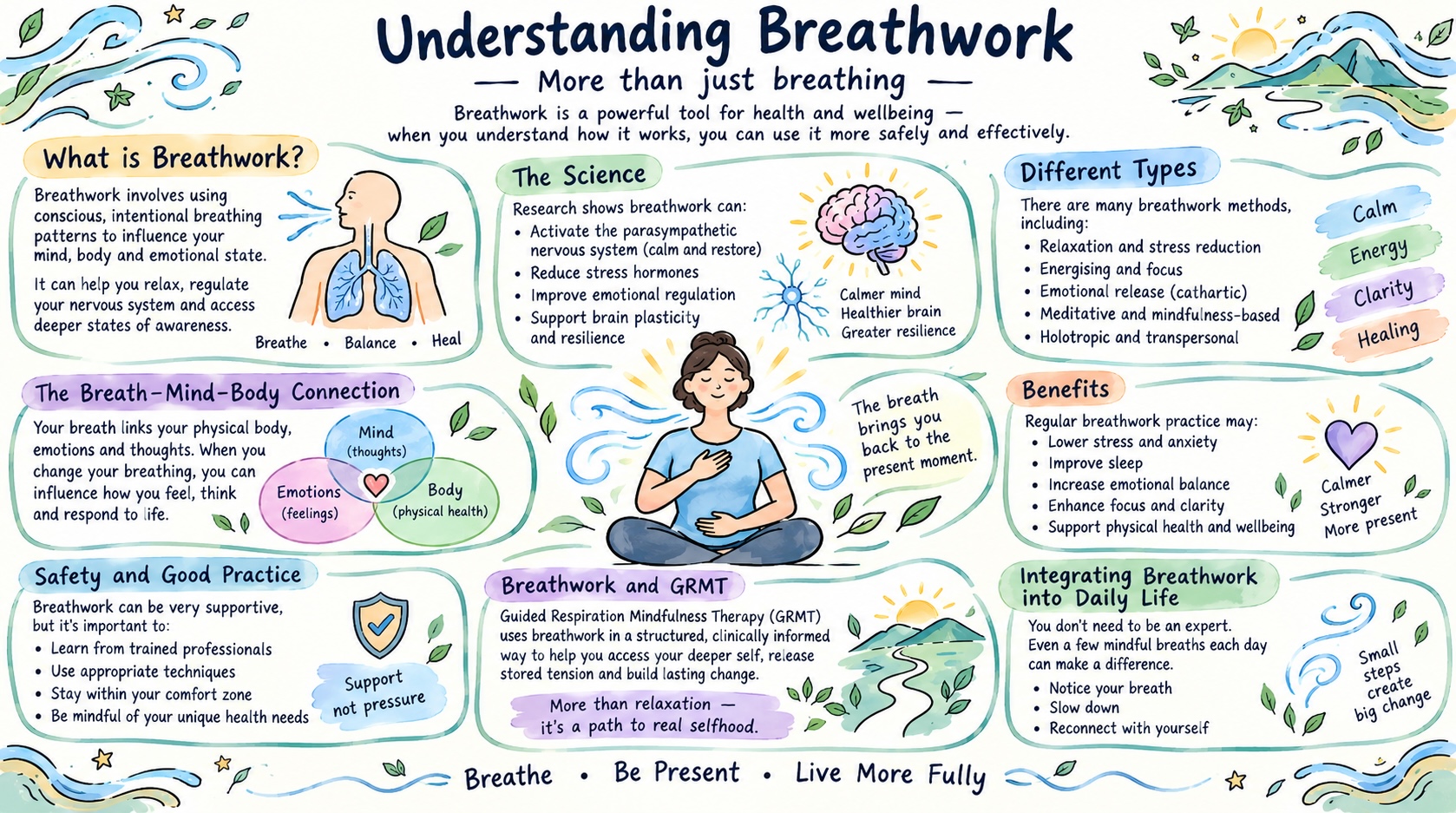
Our breathing is closely connected with what is happening within us. We naturally breathe differently when we are relaxed, excited, afraid, concentrating, or under pressure. Less obvious is that we can also develop habitual patterns of breathing in response to experiences that are repeatedly difficult or threatening. These patterns may become so familiar that we no longer recognise that our breathing has changed.
Breathwork therefore involves more than simply breathing more deeply or breathing in a particular rhythm. Depending on the approach, it may involve deliberately changing the rate, depth, rhythm, or location of breathing, or simply becoming more aware of the breathing process. Some practices are primarily physiological or regulatory, while others use breathing as a means of exploring deeper emotional and psychological experience.
Understanding breathwork begins with recognising the importance of the breath itself: how we breathe both reflects our experience and can influence how we experience ourselves. The different ways breathwork makes use of this relationship are explored in the articles that follow.